


Tesla thought, “What if electric cars didn’t have to feel like a compromise?”
The company was founded in 2003 with a clear long-term vision: start with high-end electric cars, prove they can be amazing, and then slowly move toward affordable cars for everyone. Tesla’s first car, the Roadster, went on sale in 2008. It was impressive, but the real turning point came in 2012 with the launch of the Model S.
Before Tesla, the electric vehicle market was tiny and mostly filled with plain, practical cars. Tesla looked at that same market and saw a huge opportunity. Instead of competing on price or efficiency alone, Tesla focused on performance, design, and luxury. They aimed their first real product at wealthy, environmentally conscious buyers who wanted a great car—not just a “green” one.
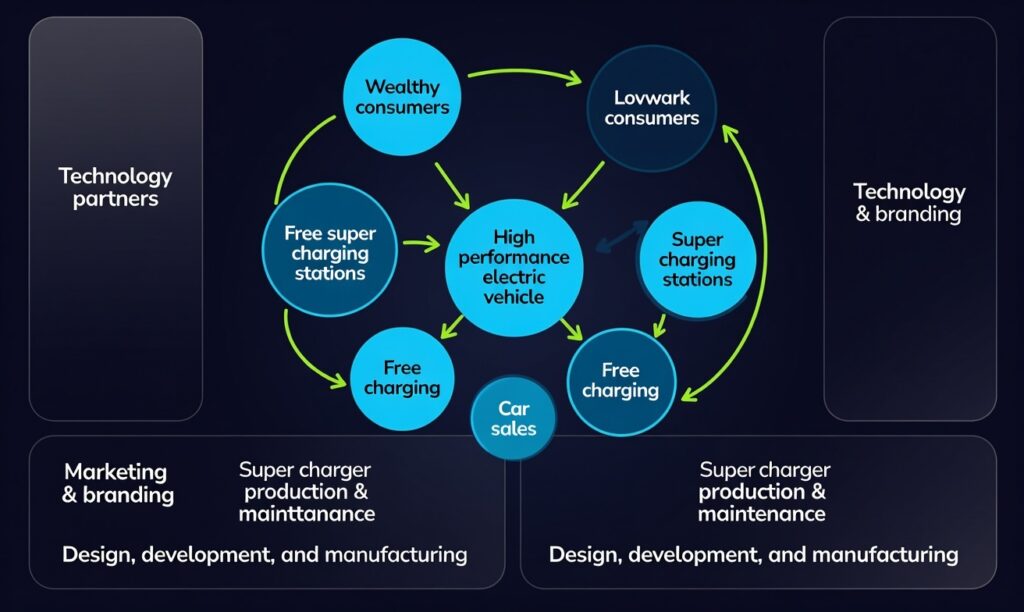
The Model S delivered exactly that. It wasn’t just good for an electric car—it was one of the best cars, period. In 2013, it was called “the best car ever tested,” and it quickly became the best-selling car in several of the richest areas in the United States. Tesla had proven that electric cars could be exciting, desirable, and premium.
Tesla also understood the biggest fear people had about electric vehicles: running out of battery. Instead of ignoring that concern, Tesla tackled it head-on. The company improved charging speeds and built its own network of Superchargers in busy locations, many of them free at the time. This made owning a Tesla feel practical and worry-free.
At the same time, Tesla was building something even more powerful than technology—a deep emotional connection with its customers. People didn’t just buy a Tesla; they believed in the company’s mission to reduce pollution and change the future of transportation. By 2014, the Model S was voted the most loved car in America, a rare achievement in the auto industry.
Unlike traditional car manufacturers, Tesla chose to sell directly to customers. Instead of dealerships, they used their website and small showroom-style stores in malls. This allowed Tesla to explain its technology properly, control the customer experience, and build a stronger relationship with buyers.
Another key difference was that Tesla didn’t think of itself as just a car company. Its vehicles were built around software. They received regular updates over the air, just like smartphones. In 2014, Tesla introduced self-driving features that improved over time by learning from real-world driving data collected from its growing community of users.
Behind the scenes, Tesla worked hard to make all of this possible. The company partnered with major players like Panasonic, Toyota, and Mercedes to strengthen its technology and manufacturing capabilities. It also pushed through serious production challenges to bring its first more affordable car, the Model 3, to market.
In the end, Tesla didn’t just enter the electric vehicle market—it completely redefined it. By seeing value where others didn’t, solving real customer fears, and building a brand people genuinely love, Tesla unlocked a massive opportunity that changed the auto industry forever.
